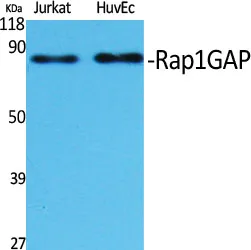
Rap1GAP Rabbit Polyclonal Antibody
APRab16896-20μL · 20μL
Verified Partner
Sign in to see pricing and request a quote.
Brand Store Product
No external links. Get your quote directly here.

Description
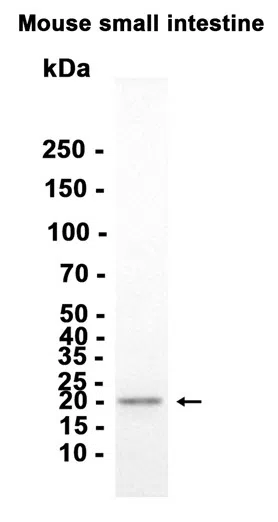
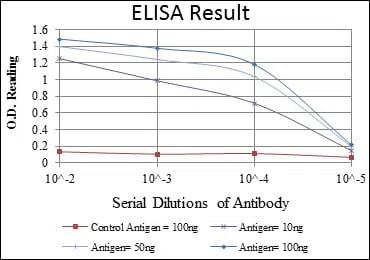
EnkiLife offers the Rap1GAP Rabbit Polyclonal Antibody. This antibody reacts with Human,Mouse species and is suitable for WB,IHC,ICC/IF,ELISA application. Alternative Names of Immunogen: RAP1GAP; KIAA0474; RAP1GA1; Rap1 GTPase-activating protein 1; Rap1GAP; Rap1GAP1. The product boasts remarkable high specificity, outstanding reproducibility, and exceptional affinity, making it a reliable and superior choice for your needs. Dilution Ratio: WB 1:500-1:2000,IHC 1:100-1:300,ICC/IF 1:50-1:200,ELISA 1:5000-1:20000 Background: RAP1 GTPase activating protein(RAP1GAP) Homo sapiens This gene encodes a type of GTPase-activating-protein (GAP) that down-regulates the activity of the ras-related RAP1 protein. RAP1 acts as a molecular switch by cycling between an inactive GDP-bound form and an active GTP-bound form. The product of this gene, RAP1GAP, promotes the hydrolysis of bound GTP and hence returns RAP1 to the inactive state whereas other proteins, guanine nucleotide exchange factors (GEFs), act as RAP1 activators by facilitating the conversion of RAP1 from the GDP- to the GTP-bound form. In general, ras subfamily proteins, such as RAP1, play key roles in receptor-linked signaling pathways that control cell growth and differentiation. RAP1 plays a role in diverse processes such as cell proliferation, adhesion, differentiation, and embryogenesis. Alternative splicing results in multiple transcript variants encoding distinct proteins. [provided by RefSeq, Aug 2011],function:GTPase activator for the nuclear Ras-related regulatory protein RAP-1A (KREV-1), converting it to the putatively inactive GDP-bound state.,induction:By 12-O-tetradecanoylphorbol-13-acetate (TPA) in promyelocytic HL-60 cells.,similarity:Contains 1 GoLoco domain.,similarity:Contains 1 Rap-GAP domain.,tissue specificity:Significant expression seen in the brain, kidney and pancreas. Abundant in the cerebral cortex and expressed at much lower levels in the spinal cord. Not detected in the lymphoid tissues.,
More from EnkiLife