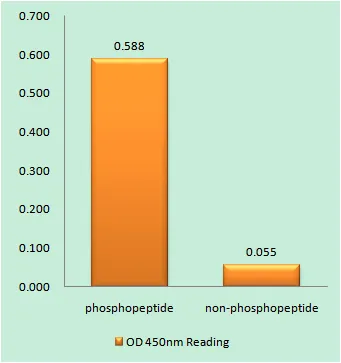
Phospho-KCNQ2/3/4/5 (Thr217/246/223/251) Rabbit Polyclonal Antibody
APRab04915-50μL · 50μL
Verified Partner
Sign in to see pricing and request a quote.
Brand Store Product
No external links. Get your quote directly here.
Description
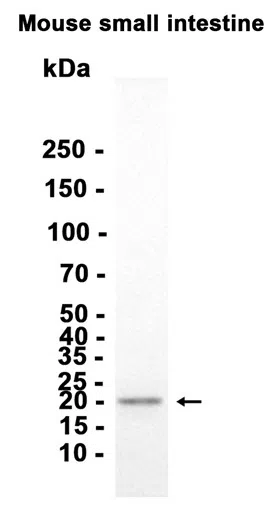
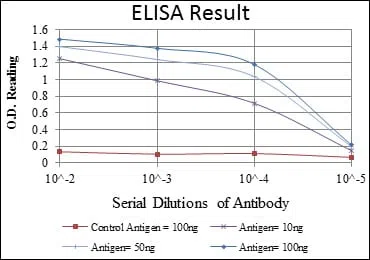
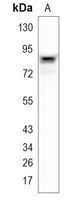
EnkiLife offers the Phospho-KCNQ2/3/4/5 (Thr217/246/223/251) Rabbit Polyclonal Antibody. This antibody reacts with Human,Mouse,Rat species and is suitable for WB,IHC,ICC/IF,ELISA application. Alternative Names of Immunogen: KCNQ2; Potassium voltage-gated channel subfamily KQT member 2; KQT-like 2; Neuroblastoma-specific potassium channel subunit alpha KvLQT2; Voltage-gated potassium channel subunit Kv7.2; KCNQ3; Potassium voltage-gated channel subfamily KQT me. The product boasts remarkable high specificity, outstanding reproducibility, and exceptional affinity, making it a reliable and superior choice for your needs. Dilution Ratio: WB 1:500-1:2000,IHC 1:100-1:300,ICC/IF 1:50-1:200,ELISA 1:10000-1:20000 Background: The M channel is a slowly activating and deactivating potassium channel that plays a critical role in the regulation of neuronal excitability. The M channel is formed by the association of the protein encoded by this gene and a related protein encoded by the KCNQ3 gene, both integral membrane proteins. M channel currents are inhibited by M1 muscarinic acetylcholine receptors and activated by retigabine, a novel anti-convulsant drug. Defects in this gene are a cause of benign familial neonatal convulsions type 1 (BFNC), also known as epilepsy, benign neonatal type 1 (EBN1). At least five transcript variants encoding five different isoforms have been found for this gene. [provided by RefSeq, Jul 2008],alternative products:Additional isoforms seem to exist,disease:Defects in KCNQ2 are the cause of benign neonatal epilepsy type 1 (EBN1) [MIM:121200]. Benign neonatal epilepsy is characterized by clusters of seizures occurring in the first days of life. Most patients have spontaneous remission by 12 months of age and show normal psychomotor development. The disorder is distinguished from benign familial infantile seizures by an earlier age at onset.,disease:Defects in KCNQ2 are the cause of benign neonatal epilepsy with myokymia (EBNMK) [MIM:606437]. EBNMK is a syndrome characterized by benign neonatal convulsions followed later in life by myokymia.,disease:Defects in KCNQ2 are the cause of myokymia isolated type 2 (MK2) [MIM:606437]. Myokymia is a condition characterized by spontaneous involuntary contraction of muscle fiber groups that can be observed as vermiform movement of the overlying skin. Electromyography typically shows continuous motor unit activity with spontaneous oligo- and multiplet-discharges of high intraburst frequency (myokymic discharges). Isolated spontaneous muscle twitches occur in many persons and have no grave significance.,domain:The segment S4 is probably the voltage-sensor and is characterized by a series of positively charged amino acids at every third position.,function:Probably important in the regulation of neuronal excitability. Associates with KCNQ3 to form a potassium channel with essentially identical properties to the channel underlying the native M-current, a slowly activating and deactivating potassium conductance which plays a critical role in determining the subthreshold electrical excitability of neurons as well as the responsiveness to synaptic inputs. KCNQ2/KCNQ3 current is blocked by linopirdine and XE991, and activated by the anticonvulsant retigabine. Muscarinic agonist oxotremorine-M strongly suppress KCNQ2/KCNQ3 current in cells in which cloned KCNQ2/KCNQ3 channels were coexpressed with M1 muscarinic receptors.,miscellaneous:Inclusion of isoform 6 in heteromultimers results in attenuation of potassium current. Prominent expression of isoform 6 in the developing brain may alter firing repertoires of immature neurons excitability to provide cues for proliferation rather than differentiation.,miscellaneous:Mutagenesis experiments were carried out in Xenopus oocytes by coexpression of either KCNQ2(mut) and KCNQ3 at the ratio of 1:1, or of KCNQ2(mut), KCNQ2(wt) and KCNQ3 at the ratio of 1:1:2, to mimic the situation in a heterozygous patient with BFNC1 disease.,PTM:In Xenopus oocytes KCNQ2/KCNQ3 heteromeric current can be increased by intracellular cyclic AMP, an effect that depends on phosphorylation of Ser-52 in the N-terminus region.,similarity:Belongs to the potassium channel family. KQT subfamily.,subunit:Heteromultimer with KCNQ3. May associate with KCNE2.,tissue specificity:In adult and fetal brain. Highly expressed in areas containing neuronal cell bodies, low in spinal chord and corpus callosum. Isoform 2 is preferentially expressed in differentiated neurons, whereas isoform 6 is prominent in fetal brain, undifferentiated neuroblastoma cells, and brain tumors.,
More from EnkiLife