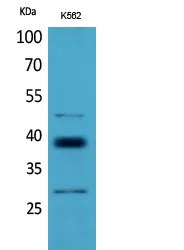
CD1D Rabbit Polyclonal Antibody
APRab08263-100μL · 100μL
Verified Partner
Sign in to see pricing and request a quote.
Brand Store Product
No external links. Get your quote directly here.
Description
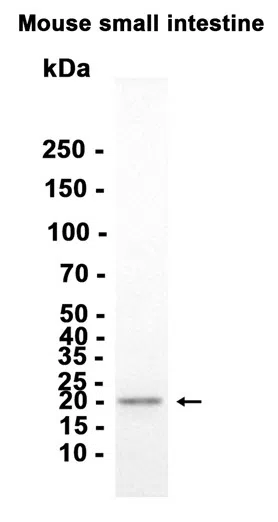
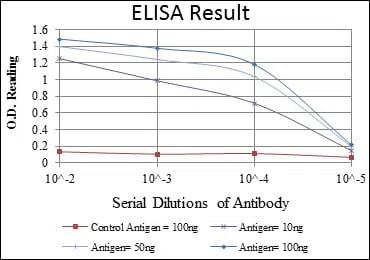
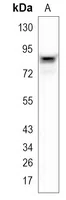
EnkiLife offers the CD1D Rabbit Polyclonal Antibody. This antibody reacts with Human,Rat,Mouse species and is suitable for WB,IHC,ICC/IF,ELISA application. Alternative Names of Immunogen: CD1D; Antigen-presenting glycoprotein CD1d; R3G1; CD1d. The product boasts remarkable high specificity, outstanding reproducibility, and exceptional affinity, making it a reliable and superior choice for your needs. Dilution Ratio: WB 1:500-1:2000,IHC 1:100-1:300,ICC/IF 1:50-1:200,ELISA 1:10000-1:20000 Background: This gene encodes a divergent member of the CD1 family of transmembrane glycoproteins, which are structurally related to the major histocompatibility complex (MHC) proteins and form heterodimers with beta-2-microglobulin. The CD1 proteins mediate the presentation of primarily lipid and glycolipid antigens of self or microbial origin to T cells. The human genome contains five CD1 family genes organized in a cluster on chromosome 1. The CD1 family members are thought to differ in their cellular localization and specificity for particular lipid ligands. The protein encoded by this gene localizes to late endosomes and lysosomes via a tyrosine-based motif in the cytoplasmic tail. Two transcript variants encoding different isoforms have been found for this gene. [provided by RefSeq, Jan 2016],function:Antigen-presenting protein that binds self and non-self glycolipids and presents them to T-cell receptors on natural killer T-cells.,miscellaneous:During protein synthesis and maturation, CD1 family members bind endogenous lipids that are replaced by lipid or glycolipid antigens when the proteins are internalized and pass through endosomes, before trafficking back to the cell surface.,similarity:Contains 1 Ig-like (immunoglobulin-like) domain.,subcellular location:Subject to intracellular trafficking between the cell membrane, endosomes and lysosomes.,subunit:Heterodimer with B2M (beta-2-microglobulin). Interacts with MHC II.,tissue specificity:Expressed on cortical thymocytes, on certain T-cell leukemias, and in various other tissues., Research Area: Hematopoietic cell lineage;
More from EnkiLife